












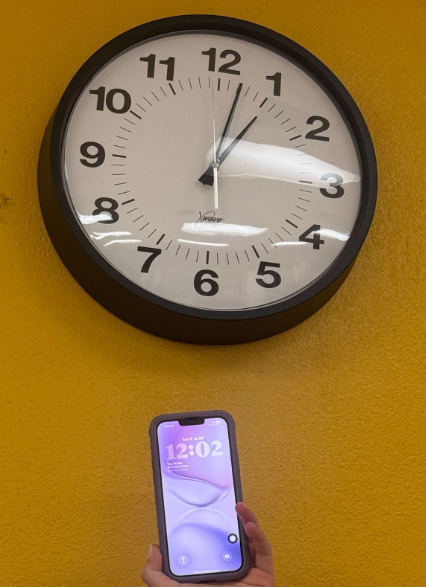














Daylight saving time (DST) usually occurs in early March. The clocks shift forward an hour at 2:00 am that day.
Ontario, Canada, was the first place to adopt DST in 1908. Many countries, including the United States, adopted this custom in 1918 as a way to conserve fuel during World War 1. Soon after the war ended, most countries stopped using DST.
During World War 2 many places, including America, brought it back year-round as a way to conserve resources once again. After the war, local jurisdictions were free to choose if they wanted to keep it or not until former President Richard Nixon signed permanent daylight savings time into law in Jan. 1974.
It was then repealed by former President Gerald Ford in October of that year after complaints of children going to school in the dark and people commuting to work in pitch black. Now, all states participate in DST except for Hawaii and Arizona.
I believe that daylight saving should be eliminated, which means that the sun would set around an hour earlier in the summer. Since I am a night owl, as most teenagers are, I am much more productive when the sun sets earlier because I have more time to do my work.
Other students at Beverly agree, freshman Katori Styles says, “I like when it gets dark early so I can sleep a bit earlier. It gives me more time to rest since there isn’t light keeping me up.”
DST also affects your health, Stanford Professor of Psychiatry and Behavioral Sciences, Jamie Zeitze, said, “You generally need more morning light and less evening light to keep well synchronized to a 24-hour day”.
Furthermore, an analysis from UT North Western shows that daylight saving time disrupts the circadian rhythm (the body’s internal clock). The shift creates confusion between our body’s time signals and external time signals. The cells in our bodies are disrupted by the time change and can trigger stress hormones, leading to sleep deprivation, memory loss, and disorientation.
Additionally, the loss of sleep can affect weight gain/loss and strokes because of changes in our hormones. Even traffic accidents can be seen to increase by about 6%.
If we eliminated DST, health risks would be reduced, and the human body would better align with its natural 24-hour clock.