
















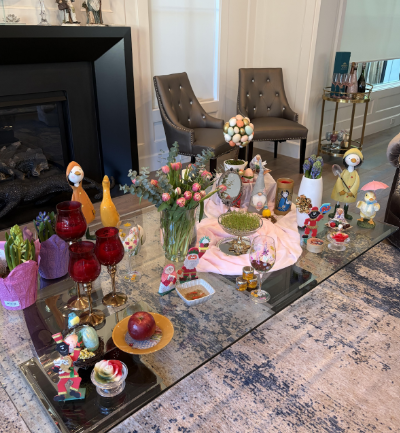
Persian New Year, or Nowruz, is a predominantly Iranian holiday celebrated to mark the start of the new year based on the sun and seasons. Nowruz happens at the start of spring, either falling on March 20 or 21.
Nowruz began 3,000 years ago in modern-day Iran. Rooted in Zoroastrianism, an ancient monotheistic religion, Nowruz originally was celebrated by those in the Persian Empire. It was originally celebrated to mark the first day of spring, which was a special time because it symbolized the “light over darkness”. While it’s has celebrations have expanded since, the main idea of the holiday stays the same; the main idea of Nowruz is the start of a new beginning. Some of the traditions include spring cleaning and buying new clothes, to represent starting fresh and getting rid of the old. During the holiday, people spend time with their families and also receive gifts. The holiday lasts for 13 days at the end of Nowruz.
Freshman Audrey Rezvani said,“ My favorite part of Nowruz is setting up the haftseen table with my family, and I love how my mom teaches me about all the Nowruz traditions while we have dinner.”
Arguably, the most important tradition is the haftseen table. Seven items, all starting with the letter “s”, are placed on the table. “Haft” in Farsi means “seven,” and “seen” is the letter “s.” The items placed are Sabzeh (sprouts), Samanu (sweet pudding), Seer (garlic), Seeb (apple), Senjed (dried fruit), Serkeh (vinegar), and Sumac (spice). Some families also add mirrors, candles, painted eggs, goldfish, flowers and coins.
There is a tradition called “Sizdah Bedar,” which translates to “getting rid of thirteen” or the thirteenth, outdoors, during which families usually go outside and have a picnic. It is tradition to go outside because it way to have a restful day and embrace nature.
Sophomore Leona Nissani stated, “We celebrate Nowruz by having a big family dinner, and we have food that you would normally have on Nowruz, like salmon and rice.”
Nowruz is not only a great way for Persian families to start the year fresh.